subscribe by going to wheelwithit.com/subscribe
[00:00:00] I am a two-time stroke survivor who had very unexpected strokes at the age of 46 and 47. Otherwise, very healthy woman in the prime of her career. My career was going like gangbusters. I was in corporate communications and PR, and everything was going swimmingly until I woke up
[00:00:17] one morning and couldn't get out of bed. It was such a huge surprise to me. I didn't expect to be having a stroke because I'd never had a health issue in my life really. And so I had
[00:00:27] to deal with having surgery to remove the clots that were in my brain and then recovering from a stroke and having to battle post-stroke anxiety and post-stroke depression. Welcome to the Wheel With It podcast with your host Devon. At Wheel With It, we are dedicated to
[00:00:45] exploring DEI issues in a fair, balanced, and fun way. Let's get into the episode. Hello hello! Welcome to another episode of Wheel With It. I am your host Devon Wieters.
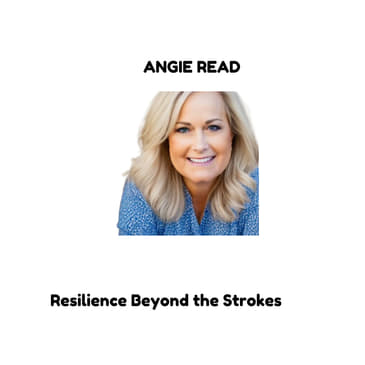
[00:00:55] And today we have Angie Reed on the podcast. Angie Reed was such a delight to talk to. She's a two-time stroke survivor and had a lot of mental health issues that went along with that. I'll
[00:01:08] let her tell you about it in the episode. She was a delight to talk to, and oh my gosh, you guys are gonna love this one. We geek out about Prince near the end. You guys are gonna love this one. So here's my conversation with Angie Reed.
[00:01:25] Hello! Welcome to another episode of Wheel With It. Today we have Angie Reed on the podcast today. How are you today, Angie? I'm doing great today. Thanks for asking. How are you?
[00:01:41] Good. So tell us about yourself and then we'll get started. I'm a two-time stroke survivor who had very unexpected strokes at the age of 46 and 47. Otherwise, very healthy woman in the prime of her career. My career was going like gangbusters. I was in corporate communications and PR. And
[00:02:03] everything was going swimmingly until I woke up one morning and couldn't get out of bed. It was such a huge surprise to me. I didn't expect to be having a stroke because I'd never had
[00:02:12] a health issue in my life really. And so I had to deal with having surgery to remove the clots that were in my brain and then recovering from a stroke and having to battle post-stroke anxiety and post-stroke depression, which are two very common conditions among stroke survivors.
[00:02:31] But there's not a lot of help or resources out there about having post-stroke anxiety or post-stroke depression. So when they hit me, it really hit me like a ton of bricks and set me
[00:02:41] way back in my recovery because I wasn't expecting it. I had recovered physically very quickly, but mentally I was just hitting rock bottom when I tried to go back to work. And I was pushing
[00:02:53] myself to the point of exhaustion, to the point of really questioning who I was, not being able to understand what was happening to me and really losing all sense of control over my life to where I had to be hospitalized for post-stroke anxiety and post-stroke depression.
[00:03:08] They became very disruptive to my life and completely debilitating to where one night I almost actually took my own life. Oh gosh, I'm sorry to hear that. Can you tell us like what that was
[00:03:20] like the night that you as much as you're comfortable with the night that you almost took your own life? Yeah, it was very scary, very dark night. I've always been a very positive person, like glass half wall, very bubbly, like positive, happy personality. And once I had my
[00:03:38] stroke, it's all of that vanished and something changed in my brain. My brain was no longer the same. And the night that I considered taking my life, I really was in so much pain, physical
[00:03:50] pain, mental pain and anguish. And I didn't know how to stop it. I didn't know really what was next for me, if anything, because I felt like this was going to be
[00:03:59] my life from then on. I also, when you're at that moment where your brain is lying to you and telling you that the world would be better off without you and that you're a burden,
[00:04:09] it makes you think about everything. It makes you think about your kids. I have three kids, they weren't grown at the time because this was like seven years ago, but they were not babies either. My youngest was, I think, going into seventh grade
[00:04:24] and my oldest was going into college. So I, of course, I thought about them that night. I thought about my family, my parents, my husband, my sisters, everybody, my friends. But honestly, at the time, your brain is lying to you telling you everyone would be better off
[00:04:40] without you, that you are pain, you are burden. Everyone would be better off without you. But there was just this little nagging voice in the back of my head that just kept saying, this is not your legacy. This is not the legacy you're supposed to leave behind Angie.
[00:04:53] I think that's what stopped me from taking all my pills because I was going to just take all my medication and be done with it. I just wanted the pain to end, but luckily something
[00:05:02] stopped me and I didn't go through with that. Now I can live to tell the tale of how to overcome that and what it took me to get through and rise above that. So yeah, that's really like scary.
[00:05:14] And I went through a really scary time where I don't want to get too into it here, but I went through a really scary time where basically I didn't cut myself, but we had these
[00:05:26] like one skewers in our kitchen drawer and I was like drawing on my skin with the one skewers. And I don't want to get too much into like my closet or whatever, but my mom was like,
[00:05:36] what are you doing? And I thought like, and I think I told her what I was doing if she even asked. And my mom, you need to talk to your therapist about that. So then we had to like
[00:05:49] work through all the stuff and yeah, it was, it's terrifying when you do that, but and I'm still working through some now, but it's terrifying when you're in this moment. Yes, very scary. Nothing more terrifying than that honestly.
[00:06:06] Yeah, I wish I could describe to people who've never been that low mentally what that was like, but I don't think you can. Do you know what caused the stroke? For me, it was a little bit of a mystery because I did not have the main risk factors,
[00:06:22] which are high cholesterol, high blood pressure, smoking, family history of stroke. I didn't have any of that stuff. So it came to a process of elimination. They think it was probably a combination of birth control pills. And I have high factor eight, which is a clotting
[00:06:41] protein in the blood. When you're low in factor eight, you can be a hemophiliac, which doesn't mean you can bleed out very easily. I guess if you're high in factor eight, you can get clots, but typically those clots are like remain in the legs. But for me,
[00:06:55] I don't know. They think it was combination of birth control pills, maybe the high factor eight, and then probably also because I've always been a migraine sufferer my whole life. And if you have migraine with aura, and with aura means there's some kind of telltale
[00:07:10] sign that a stroke is coming on with me, my aura was a blind spot. I didn't want to ask. What's that? A migraine, you mean not a stroke? A migraine. I've always had migraines my whole life. So they think that the fact
[00:07:22] that I was a migraine with aura sufferer plus on birth control pills plus have high factor eight, that those things combined probably caused a stroke. Sometimes you never know exactly
[00:07:32] what caused a stroke. I just know I had two clots in my one in my brain and one in my neck. And that's what they think probably caused it the combination of those three. Yeah. So tell me like what your recovery process was like.
[00:07:46] I was really lucky. And that's another message I like to share is the sooner you spot a stroke, the sooner the sufferer can get in and get treatment. And the sooner you get treatment,
[00:07:58] the more likely you will be to recover. So because it was my husband acted so quickly and called 911 so quickly, I didn't have very far to go physically to recover. I had lost everything
[00:08:10] on the left side of my body. This was all paralyzed for about an hour or so. And then once I had clot removal surgery, I could start to move again. But it took a
[00:08:19] couple of months, I would say it was like seven straight weeks of almost daily rehab, physical rehab, occupational rehab and speech rehab to get everything back. And really, I focused a lot on my face and getting my face back to normal because I had the drooping
[00:08:36] left side of the face. So for those of us who haven't been in it since we were six months and whatever, or that haven't been in it at all. Tell the audience, I know I do well, but tell the audience
[00:08:51] what we have is for me and it was outpatient rehab. So I wasn't inpatient in the hospital, but a lot of people after stroke have to be inpatient for rehab at the hospital. In the very early days, what that looked like was a physical therapist coming to my
[00:09:07] hospital room when I was still in the hospital, wrapping a gate belt around me, putting a belt around me that she would hold onto. So they put it around your waist and that's so in
[00:09:18] case you start to fall, I can just yank the belt and get you off. Because I veered to the left for a while when I was learning how to walk again. A lot of mine was occupational therapy.
[00:09:31] So once I got into that, it was like fine motor skills development. Almost like playing children's games with the little pegs that you put in and take out. That is my favorite test of every time
[00:09:44] I go to therapy because it's like a whole game I play with myself. Can I beat my time? Yeah, it's funny because I had to do this, the DynaVision lightboard. I don't know if you
[00:09:55] ever had to do that, but the lights will flash and they're all, they're up and down into the side and you have to touch on the board when the lights flash. So it shows your
[00:10:04] peripheral vision, it shows your quickness to respond and then it's all computerized so I would always go in there and try to beat my last score every time. And it was motivating. When you're
[00:10:15] in rehab, your number one job, your number one goal is to graduate from rehab to be well enough to go back to your life, to your daily life. And it was humbling because it wasn't as quick
[00:10:29] as I thought it should be. It was still very quick for seven and a half weeks and I felt like I was physically recovered. I didn't have to walk with a cane anymore. I didn't have to, I could use my
[00:10:39] hand, my left hand, I could talk, I could walk. I was very lucky. Yeah, that's incredible that you did that. So that you got out so physically unscathed, but tell me about your post stroke,
[00:10:56] anxiety and depression. So when I'd been back to, I went back to work very quickly in a high pressure advertising marketing agency and I was expected to immediately jump back in and be at 100%.
[00:11:10] I didn't look like I'd had a stroke. So it's hard for me to even recognize that I've had a stroke. It's okay, I'm back to work. Time to be back to 100% Angie and kick ass, you know, at what I did
[00:11:20] in my career because I did pride myself a lot on my success in my career. In fact, right before my stroke, I had just written my first book and sent it off to the publisher. It was called Marketing to Gen Z
[00:11:33] and when I got back from having the stroke, the book had come back from the publisher with some minor edits that they wanted me to make. And then I had to go back and proof a bunch
[00:11:43] of things through the book and make sure all the footnotes and notes were correct. And honestly, it was because I was starting to have anxiety and depression and didn't know it at
[00:11:54] the time, I was unable to really concentrate on the book and really focus in on the changes that need to be made. And like even the words on the page would sometimes become jumbled.
[00:12:06] And I blamed it on the stroke. I thought I had irreversible like brain damage and something was wrong with my brain. But and then I would wake up in the morning just feeling this
[00:12:17] horrible pressure on my chest, like I was going to have a heart attack. That's what anxiety feels is like you're on the brink of a heart attack every second of every day. And I didn't realize it.
[00:12:27] I thought I was putting the pressure on myself because I went back to work and I was trying to I was trying to edit my book and I was trying to go back to work at 100% and I just
[00:12:36] couldn't. And then the depression in the beginning I I blamed my depressed mood on the fact that my oldest son had just gone off to college. Every mother feels that when they're oldest or when any
[00:12:48] of their children go away to college, even though my son was only 30 minute drive from home. Yes, even though my dad jokes on me, I can't wait to get out of the house because I still
[00:12:58] live with my parents because of my disability. Like I cannot imagine like how they're gonna like worry to death about me when I get my report back but I'm like, gotta happen so much time.
[00:13:12] Yeah. And the depression for me, I know a lot of people when they're depressed, they cry all the time can't seem to find joy in anything. For me it really felt like just nothing. It
[00:13:23] felt like I was nothing. I had no emotional response period. I was just flat. It felt like I was flatlined emotionally. I didn't have any inflection in my voice. I didn't care one way
[00:13:35] or the other what happened to me. I couldn't find joy in anything. And to me, having been a very happy, very upbeat person my whole life to go from that to basically nothing like flatlined
[00:13:47] personality was just such a night and day experience. And it made no sense. It made no sense at all. I didn't know who I was or what was happening to me. But I knew the stroke had caused it because
[00:13:59] it immediately changed like after my stroke. And my first neurologist after my stroke told me it was psychological not neurological, and that he couldn't help me. But I was so desperate at that time. I needed answers. I needed to know what was happening to me.
[00:14:17] And I finally found a neurologist after a series of events. I found another neurologist who basically told me absolutely Angie, of course 100% your stroke caused your anxiety and depression. In fact, up to 50% of stroke survivors will have post-stroke anxiety and
[00:14:35] post-stroke depression. So it is not your fault. It is caused by the stroke. It's not just psychological. And it didn't take the issues away, but it gave me an answer. And once I have an answer,
[00:14:47] then I can find the solution to figure out how to move forward. And so it was just hearing that, yes, your stroke caused that helped me get over the hump and stopped blaming myself because I
[00:14:59] just felt like I was too weak to handle life and too weak to handle my issues. And for me, that was like unacceptable. I couldn't accept that about myself. I couldn't accept weakness in
[00:15:10] myself, which is sad. What made you decide to seek inpatient help? And what was it like being in the facility? So in the beginning, I wasn't seeking inpatient help. I was seeking just
[00:15:22] whatever mental health help I could get to get out of crisis. My psychiatrist recommended I go in and be evaluated for a potential intensive outpatient program. It's called IOP. And most mental health
[00:15:37] facilities or therapy therapists will recommend or have IOPs that they offer to patients. So I went in one day to be evaluated. And apparently I flunked the evaluation, said we need to admit you
[00:15:53] too. We need to admit you right away because I was in crisis mode when you're in crisis mode, meaning you are suicidal, you have thought about it, you have a plan for it. They have
[00:16:05] to take immediate action. So they admitted me at the time I thought, because I wasn't sleeping and I wasn't eating, which were also two byproducts of my stroke. Horrible insomnia and just nothing
[00:16:17] tasted right. And those two, I thought those two things were what were causing my anxiety and depression, especially when you can't sleep at all. That's a form of torture. And so I thought
[00:16:29] going, I was like really that they were going to admit me to an inpatient program because I thought they'll be able to give me medication to help me sleep fine. And I thought I would
[00:16:37] get the rest I needed, but I was wrong. Yeah, because I had a period where I didn't sleep and I've been diagnosed with anxiety before I was 16. And when it was really bad, like right before I
[00:16:50] got on medication when I was 16, like I was not sleeping at all. And then that made it worse. So I'll get on some medication, get some sleep, and I'll lean over. And no. Yeah, medication. I ended up finally getting medication to help me sleep,
[00:17:06] but it wasn't an inpatient. It wasn't when I was an inpatient. They started prescribing things, but nothing could really knock out my insomnia right away. And that's what I was seeking most. I just
[00:17:16] wanted to sleep. I just wanted to sleep away the pain. Luckily we found a medicine like first shot that works for my insomnia and it's an as needed medication. And I literally haven't
[00:17:29] taken it in years. And even when I do need something to sleep, I prefer benadryl because that other medication has gives you crazy headaches. I'm like, I don't feel like dealing with all that.
[00:17:40] But yeah, it was how was your first full night's sleep? It was glorious. I think my first full night's sleep, I slept 12 hours and I thought, oh my God, I'm a new person. I felt like a brand
[00:17:52] new person. I felt, I remember that morning waking up going, oh my God, sleep. Thank God. I felt like I was like, I felt a newborn baby. Like, yeah, they just come out of my mother's womb
[00:18:06] or something. It was so good. It was like, yeah, there's nothing better than a great night's sleep, especially when you've had insomnia for months. And it's just, there was nothing like it. I
[00:18:16] could barely explain it. It was so awesome. Yeah. And what was it like being in the facility? What kind of things did they do? Yeah. And I don't want, I didn't have the
[00:18:25] best experience. I don't want to put anybody off of it because most of the people that are in inpatient facilities need to be there. It's crisis mitigation, but being inpatient at a mental
[00:18:37] health facility is not meant to cure you. You're not going to leave there having all the answers, being completely cured of your issues. It's really to get you through the crisis, to get you through the immediate crisis and then to try to set you up for success once
[00:18:53] you leave. So they try to help you find like a psychiatrist or a therapist that you can meet with regularly. They try to make sure you're set up with any medications you might need. And then most of them try to transition you into their intensive outpatient program
[00:19:10] so that they see you at least three days a week with some pretty intensive therapy. I ended up doing a different intensive outpatient therapy program. My sisters had done a bunch of research and found this place in town that they thought I would like
[00:19:25] and they were right. It was fantastic for me. I really wanted to get away from the hospital setting or the mental facility setting and being more of just like a therapist's office
[00:19:35] for something. I didn't like feeling like I was a mental patient and I think I struggled with the, I struggled with some of the stigma that's included in it but now I tell everyone,
[00:19:46] yes, I will probably need psych meds for the rest of my life and that's okay. I don't care. I will take them gladly if they keep me from having mental health issues again because there's
[00:19:56] nothing worse. There's nothing worse. Do you mind me asking what you're on and we can cut it out of the pot if you're not comfortable? I'm happy to tell you. I just want any of your listeners
[00:20:07] to realize that every medicate you will respond differently to every medication and it has to be prescribed by your psychiatrist in conjunction with working through what your issues are. Mine, it finally, it took Remeron which is the generic is called Martazapine. It's also a medication that
[00:20:23] helps you sleep and helps you eat because at the time I wasn't eating and sleeping when he first prescribed that to me and then it backfired because it worked so well that I started sleeping so well and then I started eating everything in sight and I ended up
[00:20:37] gaining like 80 pounds. It was horrible. I lost that eventually or have been losing that. I'm not going on that again because when I gain weight I can't lose it because I don't move around
[00:20:48] as much. Yeah, it's hard. It's hard and then I'm also untrasidam and so that's for sleep and depression and I it wasn't the Remeron alone was not going to get me to sleep and it was transadam first I started at 50 milligrams then they brought me up to 100
[00:21:06] and then 150 and even at 150 milligrams I wasn't sleeping so it bumped me up to 200 milligrams of transadam and that's what I started. Yeah, yeah it knocks me out and then I'm also on Zola because
[00:21:20] at one point I'd been on Xanax for as needed anxiety but I felt like I needed it every day and then my neurologist said hey Xanax is not great for stroke survivors it can impede stroke
[00:21:34] recovery in the brain she said so I recommend that you have your psychiatrist switch you to something in the Zolok family. You learned so many just crazy strange things when yeah I didn't even know
[00:21:46] that it could impede stroke recovery. I didn't either and my psychiatrist who's fabulous didn't know that either and was eager to move me over to Zolok once my neurologist recommended it but I'll tell you during that time of experimentation trying to figure out the right medications for me
[00:22:05] I tried Welbutrin, I tried Tryntalex. I had been on Selexa before my stroke and it became irrelevant after my stroke it didn't do a damn thing for me because my brain chemistry had changed
[00:22:19] and I also tried Simbalta. It felt like I had tried just so many different things that kept giving me horrible side effects and were not knocking down the anxiety and depression because once you start getting side effects it can increase your anxiety and depression that you have because
[00:22:35] you're having side effects and then so I felt like a pin cushion for a while felt like a medical experiment for a while it's not always a one and done it takes some trial and error to get
[00:22:47] the right medication for you because I think my psychiatrist has said really each medication will probably only work in 30% of the population so it's really a kind of a trial and error until you
[00:23:00] can get the one that works for you and also it's not just medication it's not just the medication that will help you get better you also have to put in the work the medication will get you so far
[00:23:12] but your determination and your state of mind your sorry your mental and emotional state and resilience will get you the rest of the way so that your your medication can only do so much you
[00:23:26] can't just only rely on taking a pill to feel better yeah and that's what you talk about in the book you talk so much about why we need to be resilient different mindsets and I'm really
[00:23:36] enjoying the book so far oh good great I'm glad it's called Rise Mastering the Art of Resilience and it's my fourth book that I've written since my stroke it's what's funny because everybody kept saying how resilient I was and saying oh you're the most resilient person I've
[00:23:53] ever met and things like that and it used to really make me mad because you're only resilient because you're forced to be resilience became the buzzword during the pandemic how resilient we all were in the face of this pandemic and that's true and that's true and I think
[00:24:10] for me I finally just had to embrace the word and say it's meant as a compliment yes I had to go through some crap to get here but yes I am resilient because I'm I see the light at the
[00:24:22] end of the tunnel I'm moving forward with purpose I'm out of the dark place I was able to help myself get out of that dark place and I know that it's possible for others as well and so I
[00:24:34] I don't want any other stroke survivors to ever feel like they have to take their own life because stroke survivors are at a higher risk of suicide than the general population and that's just devastating honestly you go through this horrible health crisis and many times it leaves
[00:24:51] you majorly with a major disability and that's going to affect your mindset and obviously affect your mental health but we have to get out in front of it and start talking about these issues
[00:25:02] and making sure stroke survivors know there are resources out there to help them and that they're not alone yeah that's really powerful he said so when you were released from the
[00:25:11] mental health facility what kind of stuff did you take to make sure that like your mental health was good yeah very good question I had to start seeking pretty like I told you I enrolled in an
[00:25:23] intensive outpatient program that was designed for anxiety and depression mostly anxiety but and then I was also going to one-on-one therapy and through the iop as well as my individual therapy I learned what I call my mental health hacks which is just easy things that you can do
[00:25:43] anybody can do to manage their mental health and it's crazy now when I look back that I fought against some of these things like my therapist told me I should start journaling and I just
[00:25:54] have never been oh my god this is a good segue have you heard of Kurt Thompson um not it's not ringing a bell he has to look at all he's basically a Christian psychiatrist Christian
[00:26:08] physician that studies the intersection of the bible and how the brain works and I know we have people of all faith that was into this but no matter what you believe he is a brilliant man I
[00:26:22] just discovered him like a few months ago and he has a podcast called the being known podcast and they have you do it every therapist said every therapist that I've ever had said why don't you
[00:26:36] journal what I'm like I'm not a journal I'm not a journal like I don't do it and I I guess I'm definitely afraid somebody's gonna find it I don't know I told my parents everything so I'm like
[00:26:51] why would they be afraid to find it but I'm definitely scared it's gonna fall into the wrong hands and I don't know it's gonna end up like offline somewhere or something so um I know
[00:27:03] that's an irrational fear but that's what I'm but anyway they have the at the end of every episode they have these applications that you can do and it's basically as give you prompts or ask you
[00:27:16] questions like think of a time when this or like right about a time when this or what did this teach you or whatever and I've been doing it a little bit of a different I've been doing
[00:27:26] this for the past few weeks and I've learned it's a little bit over different so I'm like okay maybe I should maybe there's something to this but anyway they're definitely yeah and I was the same
[00:27:36] way I've never been one to journal and because part of the problem is that I'm a perfectionist and I've been in writing for my entire career so I'm very particular about spelling and
[00:27:48] punctuation and grammar and when I just freestyle write sometimes I'm like ah I didn't say that and I I self edit and I get very get very judgmental of myself and how I'm writing my thoughts
[00:28:02] but I don't just freestyle write I like that that you have these prompts that you're talking about the prompts that get you going they get you thinking prompts are very helpful the way I
[00:28:13] journal is I write down what I'm grateful for so it's not I don't necessarily call it my gratitude journal but I do write down 10 things I'm grateful for every single day and then I also
[00:28:25] write down 10 self affirmation statements or I am statements to help my brain just to train my brain to get more positivity and positive reinforcement and for me journaling sometimes I'll write about
[00:28:40] my concerns or what's troubling me but most of the time I just write my gratitudes and my I am statements and that's about enough for me but there's something about slowing down and taking
[00:28:51] the time to write something down in a book and I'm not talking about digital journaling which some people love but there's something scientifically proven about the hand to paper action that slows down your brain it slows your brain from the constant
[00:29:08] hamster will of anxiety and depression there's just something about it that's helpful I resisted journaling for a very long time until I finally was forced to and realized in very
[00:29:20] short order that it was super helpful and that as long as I don't judge myself as long as I'm not self editing so now I have to make it so that I don't edit myself I can't go back and cross
[00:29:31] out words and stop just get it written don't get it right just get it out of your head that's the whole point get it out of your head on the paper and don't think about somebody else
[00:29:41] reading it I the thing is a lot of people like to go back to their journals and you can start to see some patterns and get some cues as to what your triggers are based on what you're journaling
[00:29:51] I don't like to go back and read my journals because I don't like to see what I was thinking when it was negative but it's helpful no and I usually only write for the pros two sentences
[00:30:01] for each day they're not because I hate journaling so much I'm more of a verbal processor than a written processor that's whatever podcast and it makes sense and so I was like going back and
[00:30:14] we did an old one and there was nothing like I'd be fine with anybody reading that there's something like airshotting but oh my god what was doing like yeah and then a couple of the other
[00:30:28] ones that I learned ways to manage my own mental health or exercise for sure getting out and getting as much exercise as you're able to do some people after a stroke are not able to do a lot of
[00:30:40] physical exercise but anything that you can do to move your body is important also getting outside fresh air and sunshine our natures medicine really are and grounding put your bare feet in the sand
[00:30:53] or put your bare feet in the grass really connect your body to the earth and there's something so magical about that it's probably why we feel so good when we go to the beach
[00:31:03] and we're walking through sand or just makes you feel like a little kid again if you're barefoot in the grass it's so helpful for your mental health a couple of other things are getting into a routine
[00:31:14] getting and keeping a routine are so critical especially for the anxious mind seeks routine because it feels safer it feels a little bit more predictable if you if you stick to your routine
[00:31:26] less is for grabs less is questionable during your day it just really helps your mental health so long story short I got laid off from my marketing job last September and the thing I was most worried
[00:31:40] about because I was mindful of the fact that yeah I could my mental health is going to probably falter a little bit here because that's a big blow but I was most concerned about losing my
[00:31:51] routine my daily routine and getting up and going to work and that nine to five thing just when I knew that routine is very important for me so one of the very first things I did was to
[00:32:01] establish my routine of what I would do during the day versus going to work because it's so important and then I listened to uplifting music every day as I'm getting ready in the morning it really
[00:32:13] lifts your frequency and lifts your mood I always tell people if you're depressed if you're feeling down in the dumps don't listen to sad music will bring you down even further it's clear we know sad music will make us cry harder and after a breakup or something like
[00:32:27] that sad music makes us feel even sadder but if we listen to something uplifting something that makes you happy it will help start your day off on the right foot and really help lift your
[00:32:39] mental health so I've written a little book I thought I had a copy of it post-blog but I don't it's called mental health hacks 10 easy hacks to help manage anxiety and depression and some of the things I've just mentioned are included in this book and they're not
[00:32:53] rocket science they're pretty easy things and I'm sure most of us have heard them before but it's nice to have them in a handy dandy little booklet that's very easy to read short
[00:33:03] and I did that on purpose because when you're in the middle of a mental health crisis you do not have the capacity to read a full-length self-help book everyone wants to give yourself
[00:33:12] help books and be they because they love you and they want you to get through the crisis but you don't have the capacity to absorb all of that information when you're in crisis
[00:33:22] and oh my gosh yes like you don't have no please still hand somebody like a 400 page book thank you very much for loving us but that's not going to help probably
[00:33:33] no it's not I can get to you it's not I'm reading one of those now but I'm not in crisis mode either okay so can I ask with on your playlist oh my music playlist yeah I don't
[00:33:45] even have a set playlist but I just I turned my um Spotify to anything prints related because I am a child of the 80s I grew up in the 80s and I was a huge and I still am a huge prince fan so oh my gosh
[00:33:59] my dad likes prints and I love prints and yeah we need to geek out yeah it's my uplifting I listen to raspberry beret which is such a like a beboppy song it's so silly and so not that deep but it's
[00:34:15] just it always has made me feel good ever since I was like 14 years old I've loved that song no it's probably a little bit older than that but yeah yeah like prince is so good I'm a music and entertainment buff I want to be the industry
[00:34:30] obviously and or at least do it outside puzzle and prince is just prince is just prince there's no other prince I have never cried over celebrity death until prince before or after him
[00:34:44] but I did I had a big balling session at work the day that I found out he died and it's still a day that like comes around once a year the anniversary of it and it still always makes me so sad
[00:34:55] actually it's so funny the it's the 40th anniversary of purple rain this year and the revolution so princess band the revolution are getting back together to celebrate the 40th anniversary of purple rain and they're performing at first avenue in Minneapolis the place where prince and
[00:35:14] the revolution got their start and where purple rain was where all the concert scenes in purple rain is incredible and I got tickets I got tickets yes I'm going it's next month I'm going
[00:35:28] okay you have to send like me I will give you my you have my email right you have to email me pictures I can give you my number you have to like everything must everything you're comfortable
[00:35:42] showing me from that I want to see that is crazy yes absolutely I'm happy to share it's gonna be I can't wait I just cannot wait cannot wait it won't be the same without prince headlining
[00:35:54] or frontlining but and I hope they don't bring in somebody else to try to sing princess parts because nobody could ever compare but I think it's just going to be an amazing concert
[00:36:05] do you know who's gonna be like is there gonna be a lead singer or is it just gonna be instrumentals or yeah I don't know I haven't dug too deep into it I know Wendy and Lisa are gonna be
[00:36:16] they're part of the band so it's all the original I think all the original band members from the revolution and a lot of them saying backups so I think they can probably still sing the songs without Prince and still perform without him he'll definitely desperately be missed but
[00:36:32] I'm not as I don't follow Prince as much as I do modern artists obviously so I don't know like all these songs I only know some of the songs like Little Red Corvette
[00:36:42] Baby on the Star and all those songs and I don't know all the members of the band but that sounds amazing I couldn't pass up the chance I couldn't have to do it so worth whatever
[00:36:56] those tickets cost so worth it so on that note is there anything else that you want to is there anything else I want to talk about is that I said is there anything else you want to
[00:37:08] talk about since I got laid off last September I've really been focusing on helping other stroke survivors mostly female stroke survivors recover and move forward with confidence because tell us about that I'm sorry yeah so I lost all confidence in myself after my stroke I thought
[00:37:28] there's no way I'll be able to work again there's no way I'll be successful again and my brain just doesn't work the same and so I'm damaged and I don't know I just I had no confidence
[00:37:39] especially because I went through so much mental health turmoil and I lost all my confidence and going back to work was hard going back to work I was able to do it but I just didn't find the
[00:37:50] fulfillment in it and I just it was it was just not giving me what I this fulfillment that I used to get out of my career before the stroke so when I got laid off I took that as a sign
[00:38:01] that it's time for me to do something else it's time for me to use my voice and really help as many other stroke survivors as I can so I have been writing my books I think I may be
[00:38:13] finished with writing books after Rise but I never say never but what I've decided to do I've put my time and effort into becoming a certified life coach so that I can coach other stroke survivors especially female stroke survivors through the confidence crisis and
[00:38:30] their identity crisis that comes along with losing your career and losing who you are in the prime of your life because you have a stroke and there's no reason why our strokes need to
[00:38:40] sideline us or rob us of our confidence and so I've started legacy life coaching which is coaching primarily like I said primarily for female stroke survivors to help them recover their confidence and move forward with purpose that's the other thing is I didn't know
[00:38:56] what my purpose was after my stroke I felt like I didn't have a purpose and finding a new purpose is not something that just happens overnight it's that what's that passion within you
[00:39:06] that's going to keep you moving forward and keep you motivated and it took a very long time for me to find that probably several years but really it was getting laid off my marketing position back in
[00:39:17] September that was the the aha moment for me that all right something is not in alignment in my life right now so this is a sign from God that I need to do something different
[00:39:28] and I've been doing that and I love that I'm able to help other stroke survivors get through this because they're not alone and I wish I'd had a guide I would have paid I don't know what I would
[00:39:39] have paid but it would have been a lot of money to have somebody help me through those dark days I didn't know I didn't know where to go for help I didn't know who to reach out to there just
[00:39:48] weren't as many resources and there still aren't enough resources but I'm trying to be one of those resources at least so stroke survivors know they're not alone yeah and that's so cool
[00:39:59] and where can people find out about that so the website is legacy com and it's for her dot com legacy coaching for her dot com and we will put all those links in the show notes so
[00:40:11] you guys can get to them and where can people follow your social media and do all that stuff and we'll have those links in the show notes as well yeah I'm not active on instagram I know I
[00:40:25] should be I just haven't gotten there yet I feel like I'm overwhelmed trying to keep up with facebook linkedin and youtube but I have channels on all three I actually also have a private
[00:40:36] facebook group just for female stroke survivors but that's not where I'll send people but if you do know a stroke survivor especially a female stroke survivor I would love to invite her to my private facebook group because we talk about the challenges that we're all having and
[00:40:51] struggling with and it's just a great community we keep it very positive and upbeat so that we don't go down a rabbit hole of despair because that's easy to do on your own you don't need
[00:41:02] a group to help you do that yeah so that is cool we will have all those links in the show notes and thank you so much for being here and we will see you guys next episode bye guys bye thank you
[00:41:15] thank you for joining us we hope you enjoyed the show remember to follow the show and our guests on social media and subscribe to the show in your favorite podcast app using the links in the show notes please remember to rate and review us see you next time