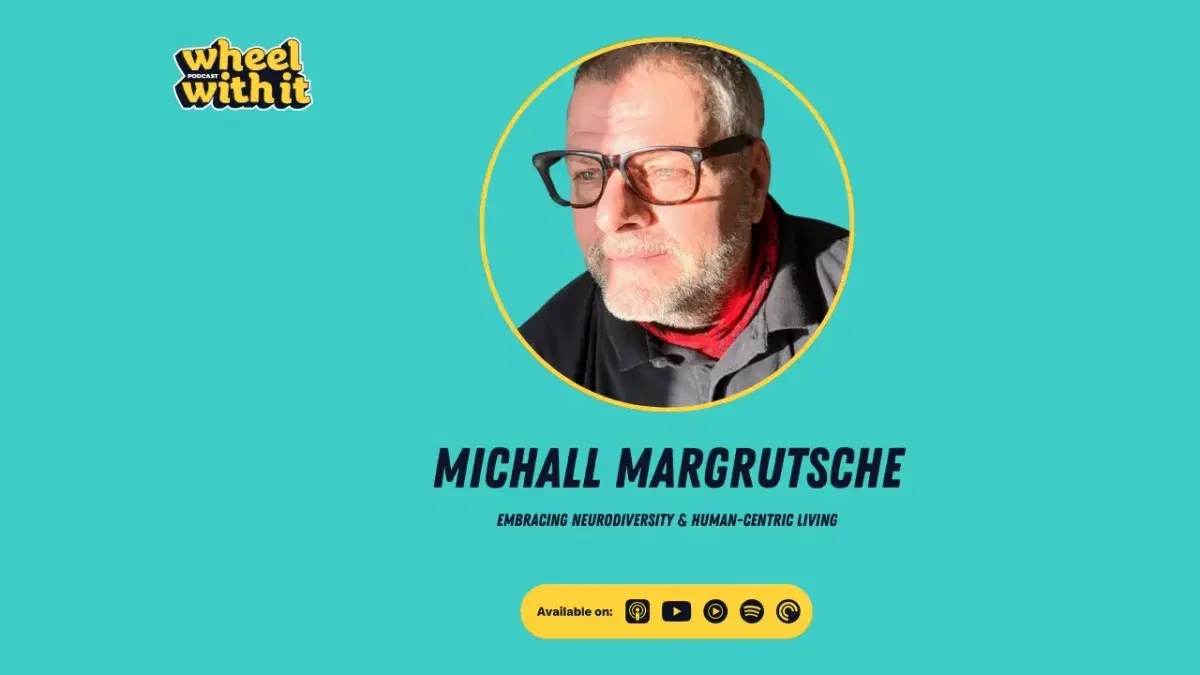
Title: Embracing Human-Centricity: A Conversation with Michael Margrutsche on Art, Neurodiversity, and System Relevance
Introduction
In the latest episode of "Wheel With It," host Devon Wieters has a compelling conversation with Michael Margrutsche, an artist and thought leader on neurodiversity and human-centric living. Michael shares his insights on how embracing our unique human experiences can transform the way we interact with art, systems, and each other.
A Journey Through Art and Neurodiversity
Michael's journey began in Vienna, Austria, where he faced challenges due to dyslexia and a lack of understanding about neurodiversity. Despite these hurdles, he has thrived, writing eight books and collaborating with renowned figures like Robert Evans. Michael illustrates that his struggles with traditional education systems have shaped his perspectives on human-centricity versus system relevance, emphasizing the importance of acknowledging our unique, individual contributions to society.
Human-Centric versus System Relevance
Michael explains that while systems are necessary, they often create artificial separations that can impede genuine human interaction. He argues that humans are integral to nature and that systems should not dictate our value or limit our potential. By respecting every person's uniqueness, we can appreciate the range of human experiences and perspectives, which can enrich our understanding and interactions.
Art as a Tool for Understanding and Inclusion
Art holds a significant place in Michael's philosophy, acting as a medium through which he learned about human experiences and connectivity. He emphasizes that everyone can participate in art creation without comparing their expression to others. According to Michael, art is about the creative process, not just the end product, making it a powerful vehicle for personal and collective growth.
The Importance of Labels and Inclusion
Michael is critical of labels that categorize people, arguing that they promote division rather than unity. For instance, referring to someone as "dyslexic" or "autistic" can reduce them to their condition rather than acknowledging them as unique individuals. He stresses that understanding each person as one of one is crucial for genuine inclusion and appreciation of diversity in society.
Why Human-Centricity Matters Now
Ultimately, Michael advocates for a balance between system relevance and human-centricity. While systems help in structure and organization, human-centricity celebrates individuality and adaptability, enabling us to learn and grow from each other's experiences. By adopting a human-centered view, we can create more inclusive environments that acknowledge and encourage diversity.
Conclusion
The conversation with Michael Margrutsche is a thought-provoking exploration of what it means to live authentically in a world driven by systems. His insights challenge us to embrace our individuality and recognize the value of every human being, urging us to prioritize understanding and cooperation over conformity. As we continue to navigate the complexities of modern life, Michael's call for a return to human-centric values is both timely and necessary.
Follow and Subscribe
To learn more about Michael's work and perspectives, be sure to visit his website at michaelm.com. Additionally, subscribe to "Wheel With It" on YouTube or Spotify and never miss an episode. Stay connected to the conversation, and join Devon and guests as they explore diverse topics that resonate with human experience.
Timestamps:
00:00 Introduction to System Relevance
00:43 Welcome to Wheel With It Podcast
01:03 Meet Michael Margrutsche
01:52 Michael's Early Life and Challenges
02:43 Working with Robert Evans
04:52 Human Centricity vs System Relevance
10:54 The Importance of Art
13:51 Political Correctness in Art
14:48 The Reality of Being an Artist
16:37 Three Human Superpowers
18:05 Closing Remarks and Social Media Plugs